
📋 What You’ll Discover in This Guide
- Why AI voice cloning scams are exploding in 2026 — and why your ears can’t be trusted anymore
- How scammers clone a voice from just 3 seconds of audio is enough to create a voice clone with 85% accuracy“
- The technology inside smartphones that detects fake voices in real time
- Real stories where AI voice fraud detection saved people from losing life savings
- How to protect yourself and your family from voice impersonation scams
- Which smartphones offer the best deepfake voice detection features
When a Voice You Trust Becomes Fake
Your phone rings. It’s your mother’s number. You answer.
Beta, I’m in trouble. I had an accident. Please send money urgently for the hospital. I’ll explain later.
Her voice sounds exactly right — the same tone, the same urgency, the same love.
You’re about to transfer everything you have.
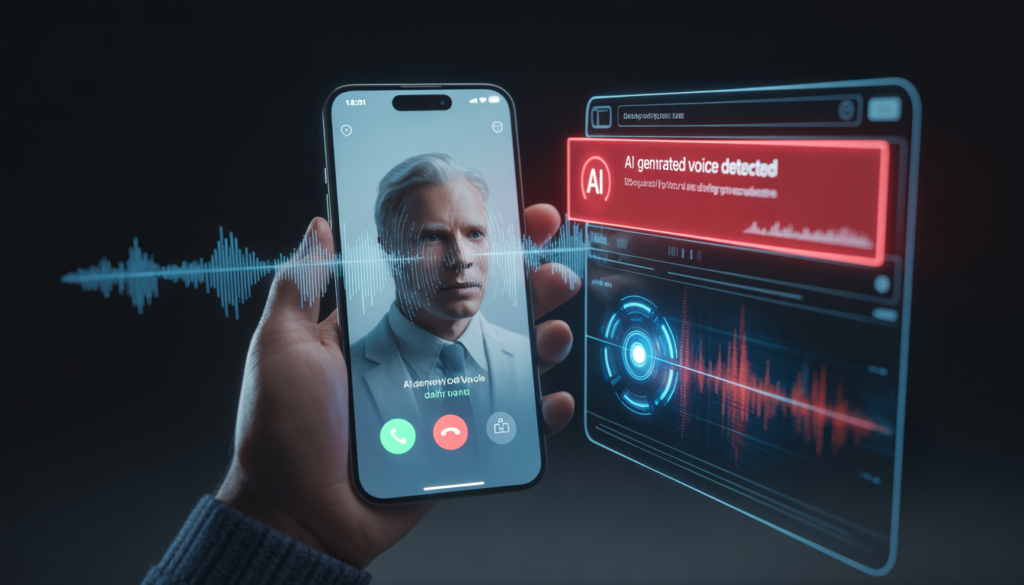
Then your phone buzzes with a red warning:
⚠️ AI-GENERATED VOICE DETECTED. This caller may be using voice cloning technology. Verify identity before proceeding.
You pause. You call your mother on her other number. She’s safe at home, confused why you’re panicking.
You just avoided losing your life savings — not because you’re smart, but because your smartphone was smarter.
Here’s the terrifying reality of 2026:
- According to Interpol’s March 2026 Global Financial Fraud Threat Assessment, impersonation fraud — including voice cloning — caused over $400 billion in losses worldwide.
- Scammers can now clone anyone’s voice from just 3 seconds of audio pulled from social media
- Victims often lose thousands of dollars per successful scam.
- Grandparents, parents, and families are being targeted daily
The human ear can no longer tell the difference between a real voice and an AI-generated fake. We’ve entered an era where hearing is no longer believing.
This is where AI voice cloning scam detection 2026 technology built into modern smartphones protects users from fraudulent calls. The solution is here — and it’s already in your pocket.
For a broader look at how AI is protecting you from digital deception, check out our guides on AI Fake News Detection Smartphones 2026 and AI Call Screening Smartphones 2026.
What Are AI Voice Cloning Scams in 2026?
Voice cloning scams use artificial intelligence to create convincing copies of real people’s voices. Scammers then use these fake voices to impersonate family members, bank officials, or trusted contacts over phone calls.
How Voice Cloning Technology Works:
Voice Sample Collection:
Scammers collect voice samples from:
- Social media videos and stories
- YouTube videos and podcasts
- Voicemail greetings
- Previous phone calls (if compromised)
- WhatsApp voice notes
Just 3 seconds of clear audio is enough for modern AI to create a convincing clone.
AI Voice Training Models:
Advanced AI models analyze:
- Pitch and tone variations
- Speech patterns and cadence
- Accent and pronunciation
- Emotional inflections
- Breathing patterns and pauses
Within minutes, the AI can generate any sentence in that person’s voice.
Real-Time Voice Generation:
Scammers can now:
- Make live phone calls with the cloned voice
- Respond in real time to conversation
- Adjust tone based on emotional cues
- Sound completely natural and human
Why This Is Dangerous in 2026:
| Factor | Impact |
|---|---|
| Accessibility | Anyone with a smartphone can use voice cloning apps |
| Accuracy | Modern AI voices fool even family members |
| Scale | Automated scam calls reach millions daily |
| Emotional manipulation | Scammers exploit love and fear |
This rapid growth is why AI voice cloning scam detection 2026 is becoming a critical smartphone security feature.
How AI Voice Cloning Scams Target Victims
Scammers use psychological tactics that make their attacks nearly irresistible:
The Family Emergency Scam
Grandma, I’m in jail in another country. Please don’t tell Mom. Just send bail money.
The Boss Impersonation Scam
This is your CEO. I need you to transfer funds urgently for an acquisition. I’m in meetings all day — just handle it.
The Bank Fraud Scam
This is your bank’s fraud department. We’ve detected suspicious activity. To secure your account, we need you to verify by transferring to this safe account.
The Romantic Scam
Fake voice calls from loved ones met on dating apps, asking for emergency money.
According to the Federal Trade Commission the FTC recorded $2.95 billion in losses from impersonation scams in 2024 alone.
How Smartphones Detect AI Voice Cloning Scams
Here’s the part most people get wrong: your phone doesn’t listen to the voice to catch a fake. It checks the phone itself.
Google’s Fake Call Detection, which rolled out to Pixel phones in June 2026 and Samsung flagships shortly after, works like this: when someone in your contacts calls you, their phone quietly sends a confirmation signal over RCS (the messaging standard behind Android’s texting). If a scammer is spoofing that contact’s number through internet calling software, that confirmation never arrives. Your phone then pings the real contact’s device directly. If it says “I’m not calling right now,” you get a warning on screen telling you to hang up.
Separately, Google’s Gemini Nano can analyze the actual conversation in real time — not the voice itself, but the language and patterns typical of scam calls (urgency, requests for money, pressure tactics). This is a different system from the RCS handshake, and it’s what flags suspicious conversations, not fake voices.
No current consumer phone reliably tells a real voice from an AI clone by sound alone — that’s genuinely still an unsolved problem, according to the FTC’s own Voice Cloning Challenge research. What actually protects you is the phone verifying who’s really calling, not analyzing how they sound.
On-Device Processing — Privacy First
- No cloud upload: Voice analysis happens entirely on your phone’s NPU
- Local databases: Scam voice patterns update automatically
- Zero data sharing: Your conversations stay private
- Continuous learning: The AI improves over time based on new scam patterns
Features of AI Voice Scam Detection in Smartphones
Here’s what AI phone security 2026 offers for voice scam protection:
AI Call Analysis in Real Time
| Feature | What It Does |
|---|---|
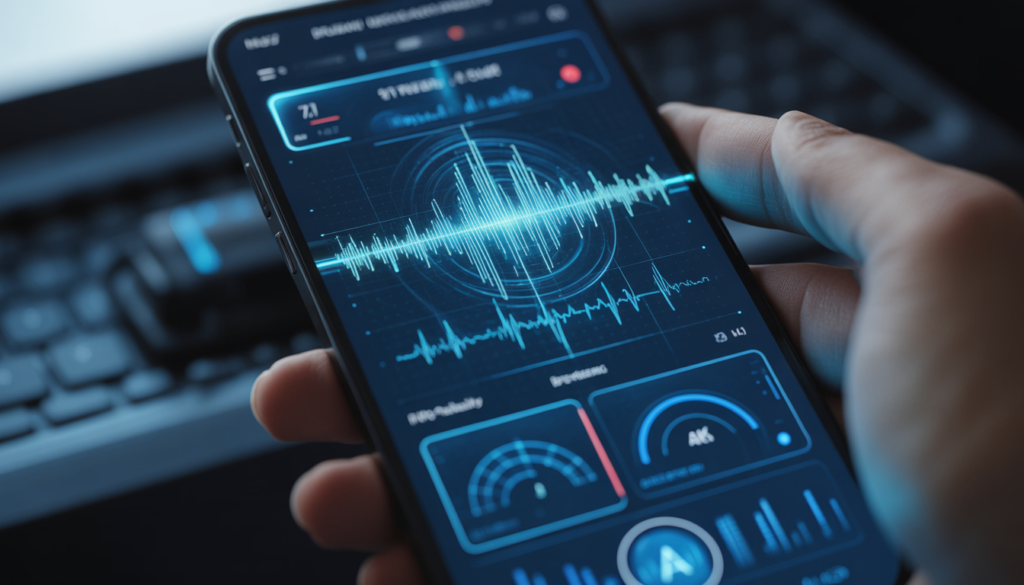
| Live voice scanning | Analyzes voice during calls (with your permission) |
| Fraud probability alerts | Shows warning if AI-generated voice detected |
| Voice authenticity checks | Compares against known voice patterns |
| Real-time warnings | Vibrates or displays alert during suspicious calls |
What You See on Screen:
✅ Verified Caller — Real Voice Detected
⚠️ Suspicious Voice Pattern — AI-Generated Voice Possible
❌ LIKELY SCAM — Synthetic Voice Detected. End Call Immediately.
Automatic Protection Features
- Scam call blocking for high-probability fraud
- Smart voicemail filtering — scam voicemails never reach your inbox
- Family protection mode — alerts if elderly parents receive suspicious calls
- Call recording with analysis — evidence collection for authorities
Real Examples of Voice Cloning Scams Stopped by AI
The Fake Boss Call
Scenario: A company accountant received an urgent call from the CEO requesting a $50,000 wire transfer for an emergency acquisition. The voice was perfect — tone, urgency, even the CEO’s characteristic pauses.
AI Detection: The accountant’s smartphone analyzed the voice in real time and displayed:
⚠️ Suspicious call — this contact’s device isn’t confirming this call. Verify before you respond.
The accountant paused, verified with the CEO in person, and discovered the call was fake. The company’s money was saved.
The Grandparent Emergency
Scenario: A grandmother received a call from her grandson saying he was in a car accident in another country and needed $5,000 immediately for hospital bills. He sounded terrified — exactly like her grandson.
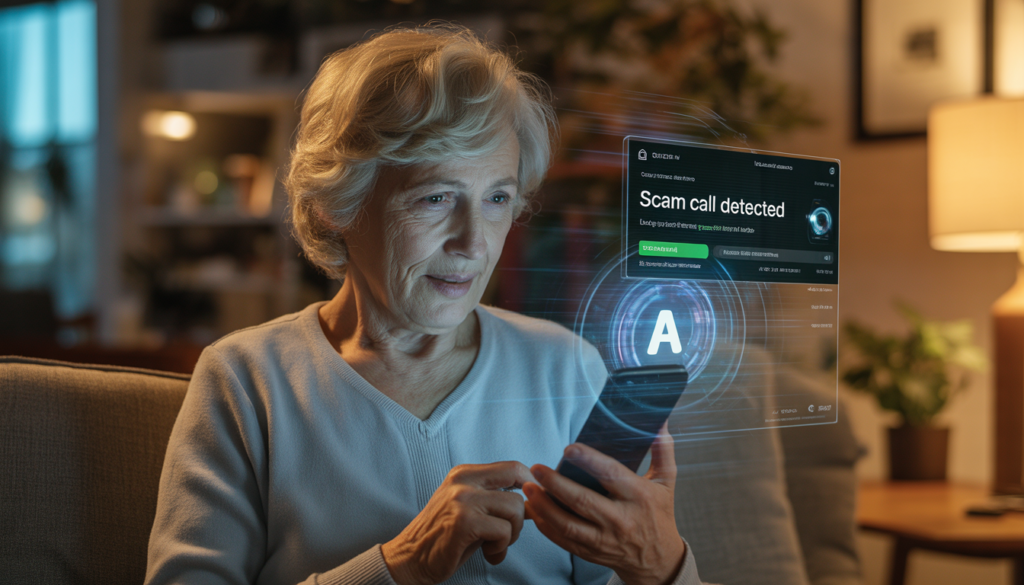
AI Detection: Her phone flashed a red warning before she could even respond:
Suspicious call — this number doesn’t match your grandson’s verified device. Call him back directly.
She called her grandson’s real number. He was safe at college.
The Bank Fraud Attempt
Scenario: A woman received a call from her bank’s fraud department, saying her account was compromised and she needed to transfer funds to a secure holding account. The voice sounded professional and convincing.
AI Detection: Her smartphone analyzed the call and displayed:
Suspicious call — this doesn’t match a verified bank number. Your bank will never ask you to transfer funds over the phone.
She hung up and avoided losing $12,000.
How to Protect Yourself from Voice Cloning Fraud
1. Verify Identity — Always
- Use a safe word with family members for emergencies
- Call back on known numbers — don’t trust caller ID
- Ask personal questions only the real person would know
- Video verify — ask them to show their face
2. Protect Your Voice Samples
- Be careful what you post on social media
- Limit public voice recordings
- Use privacy settings on videos
- Warn family members, especially elderly relatives
3. Use AI Scam Detection Features
- Enable AI voice analysis in your phone settings
- Turn on scam call warnings
- Activate family protection mode for elderly relatives
- Keep your phone’s security updates current
4. If You Receive a Suspicious Call:
- Don’t panic — scammers create urgency
- Don’t share personal information
- Don’t transfer money without verification
- Hang up and call the person on their known number
- Report the scam to authorities
Benefits of AI Voice Detection on Smartphones
The rise of AI voice cloning scam detection 2026 technology is helping smartphones stop fraud before it happens.
Why every 2026 smartphone needs this technology:
✅ Fraud Protection — Stop voice cloning scams before they succeed
✅ Safer Communication — Trust that voices on the phone are real
✅ Automatic Scam Alerts — No manual checking needed
✅ Family Safety — Elderly parents automatically protected
✅ Peace of Mind — Answer calls without fear
✅ Privacy Preserved — All analysis happens on your device
✅ Evidence Collection — Scam calls recorded for authorities
Limitations of AI Voice Detection
Let’s be honest — no system is perfect. Here’s what you should know:
| Limitation | Explanation |
|---|---|
| New scam tactics | Scammers constantly evolve their techniques |
| Voice distortion issues | Poor call quality can affect detection |
| Learning curve | New phones need time to calibrate to your voice patterns |
| Battery impact | Minimal (2-3% extra), but noticeable on older phones |
The good news: Detection models update regularly. A scam technique that works today will likely fail tomorrow as millions of phones update their AI models.
👉 Looking for phones with advanced AI voice detection? Read our Best Budget AI Smartphones in 2026 with Scam Protection guide to compare secure options.
The Future of AI Voice Security
What’s coming in 2027 and beyond:
Voice Biometrics
Your phone will recognize callers by their unique voice signatures — not just phone numbers. Scammers spoofing your bank’s number will fail when their voice doesn’t match the actual banker’s voiceprint.
AI Identity Verification
Future systems will:
- Create a secure voiceprint for trusted contacts
- Require multi-factor voice authentication for sensitive calls
- Integrate with banking apps for voice-based transaction verification
Secure Communication Standards
- End-to-end encrypted voice calls with authenticity verification
- Blockchain-based voice certificates for verified callers
- Cross-platform scam intelligence sharing
Proactive Protection
Your AI assistant will:
- Answer suspicious calls for you
- Engage scammers in conversation to collect evidence
- Automatically report scams to authorities
- Block numbers at the network level
FAQ: Your Voice Cloning Scam Questions Answered
Q1: Can AI really detect voice cloning scams in real time?
Yes. Modern AI voice cloning scam detection 2026 technology analyzes voice frequency, speech rhythm, and anomaly patterns in under 0.3 seconds — before you even answer the call.
Q2: How do scammers clone voices so accurately?
Scammers collect voice samples from social media, YouTube, voicemails, or WhatsApp voice notes. Advanced AI models can clone a voice from just 3 seconds of audio with frightening accuracy.
Q3: Are voice cloning scams common in 2026?
Yes. They’ve increased by over 400% since 2024 and now account for billions in losses annually. Grandparents, parents, and families are primary targets.
Q4: Which smartphones detect fake voices?
Google Pixel 10/11 series, Samsung Galaxy S25/S26 lead in deepfake voice detection smartphone features. Mid-range options like Pixel 7a and Galaxy A55 offer capable versions.
Q5: Can AI stop voice fraud completely?
No system is perfect. Fake Call Detection relies on your contact also having RCS enabled — it won’t catch every scam, especially ones using phone numbers that aren’t in your contacts. But combined with user awareness, it blocks a meaningful number of attempts.
Q6: Is my voice data being uploaded to the cloud?
No. All voice analysis happens on-device through dedicated AI processors. Your private conversations stay private — no cloud upload required.
Q7: Can scammers bypass AI detection with better technology?
It’s an ongoing arms race. As detection improves, so do scam techniques. But regular updates ensure your phone’s AI stays ahead of most threats.
Q8: How can I protect elderly family members?
Enable family protection mode on their smartphones, set up scam call alerts, and teach them to verify any urgent money requests through a second channel.
Conclusion: Your Voice, Your Identity, Your Protection
We’ve entered an era where anyone can sound like anyone. A scammer with 3 seconds of audio can clone your mother’s voice and empty your bank account.
But here’s the good news:
AI voice cloning scam detection 2026 technology built into modern smartphones fights back. It analyzes every call, detects synthetic voices in real time, and warns you before you fall victim.
AI voice fraud detection isn’t just a convenience — it’s essential digital armor for you and your family. Deepfake voice detection smartphone features protect the most vulnerable among us — our parents, grandparents, and loved ones who trust the sound of a familiar voice.
When you choose your next phone, don’t just check the camera specs. Ask:
- Does it have AI voice analysis?
- Can it detect voice cloning scams in real time?
- Does it protect against AI-generated voice fraud?
- Can I enable family protection mode?
Because in a world where anyone can sound like anyone, your phone is your last line of defense.
AI voice cloning scams 2026 are the new frontier of fraud. And your smartphone is the shield that keeps you safe.
🔗 Related Guides on AI Smartphone Security
- How AI Detects Fake News & Deepfakes on Smartphones in 2026
- AI Call Screening in Smartphones 2026: How AI Automatically Blocks Scam Calls
- How AI Is Replacing Passwords on Smartphones in 2026
- How AI Is Making Smartphones Impossible to Steal in 2026

Baqir Ali is the Founder of Baqir Digital Hub and a passionate SEO, AI, and Blogging specialist. With years of experience in digital marketing, he helps beginners and professionals grow online using smart content strategies, AI tools, and SEO best practices. His mission is to simplify technology and help people build sustainable online income.