
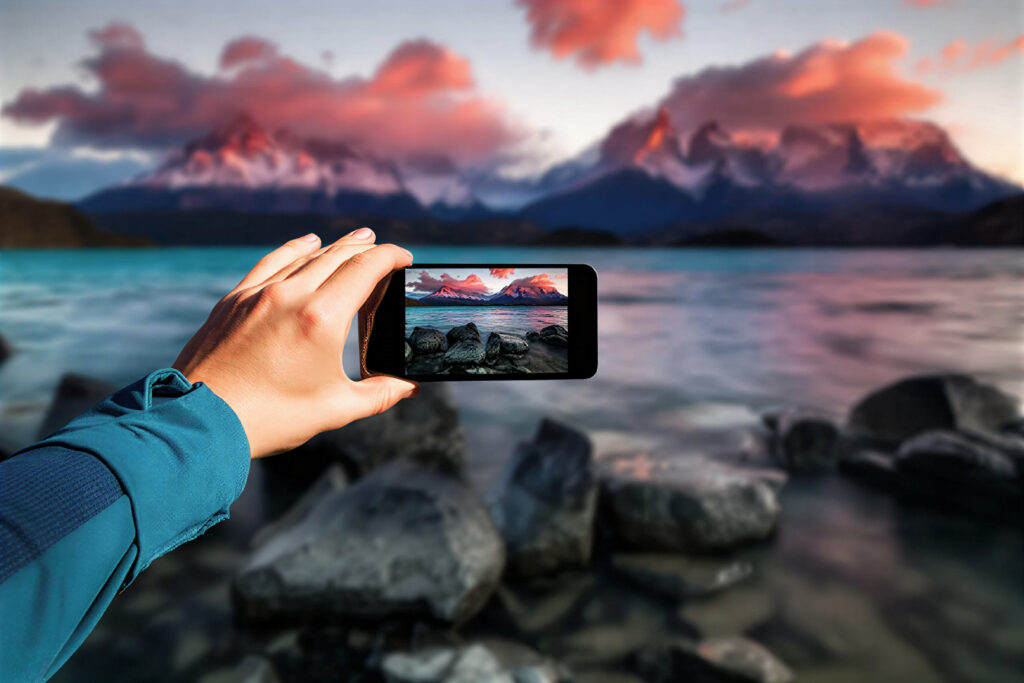
AI smartphone camera technology in 2026 has transformed mobile photography, allowing anyone to capture stunning photos without professional skills.
Picture this: You’re at a family reunion, trying to capture a group photo. The sun is setting, creating beautiful golden light but casting harsh shadows on faces. Five years ago, this would have required a professional photographer or at least someone who understood manual camera settings. Today? You simply point your smartphone, tap the shutter, and get a perfectly exposed, beautifully balanced photo where everyone looks their best. This isn’t magic—it’s Artificial Intelligence working silently in your smartphone camera.
In 2026, AI smartphone cameras have closed the gap between amateur snapshots and professional photography, has narrowed dramatically, thanks to AI-powered camera systems. What used to require years of training, expensive equipment, and manual adjustments now happens automatically in milliseconds. Your smartphone camera has evolved from a simple image-capturing device to an intelligent photography assistant that understands what you’re trying to achieve and helps you get there.
This comprehensive guide will demystify how AI transforms smartphone photography. We’ll explore the specific technologies that make ordinary photos extraordinary, understand how your phone “sees” and interprets scenes, and learn how to choose smartphones with the best AI camera features. Whether you’re documenting daily moments, creating content for social media, or capturing memories, understanding AI photography will help you make the most of your smartphone’s capabilities.
AI Smartphone Camera Explained Simply (2026)
At its core, AI in smartphone photography is about teaching cameras to think like human photographers—but with superhuman speed and consistency. It’s the difference between having a tool and having a skilled assistant who knows exactly what you want.
What Is AI Photography?
AI photography uses machine learning algorithms trained on millions of images to understand photographic principles and apply them automatically. When you point your camera at a scene, here’s what happens in that split second:
Recognition Phase: The AI analyzes the scene, identifying elements like faces, sky, foliage, architecture, or text.
Analysis Phase: It evaluates lighting conditions, colors, composition, and potential challenges (like backlighting or motion).
Optimization Phase: The camera adjusts dozens of parameters—exposure, white balance, focus, color saturation, sharpness—based on what it recognizes.
Enhancement Phase: After capturing the image, AI applies computational photography techniques to improve details, reduce noise, and balance elements.
All this happens in under a second, completely transparently. You see the result, not the complex processing behind it.
Modern AI smartphone camera systems work silently in the background, optimizing every photo and video based on scene, lighting, and subject.
Traditional Camera vs AI Camera: The Fundamental Difference
Traditional Digital Camera:
- Captures exactly what the sensor sees
- Requires manual adjustment for optimal results
- Processes one exposure at a time
- Applies basic corrections (like auto-white balance)
- Limited by hardware capabilities
AI-Powered Smartphone Camera:
- Interprets what the sensor sees
- Automatically selects optimal settings
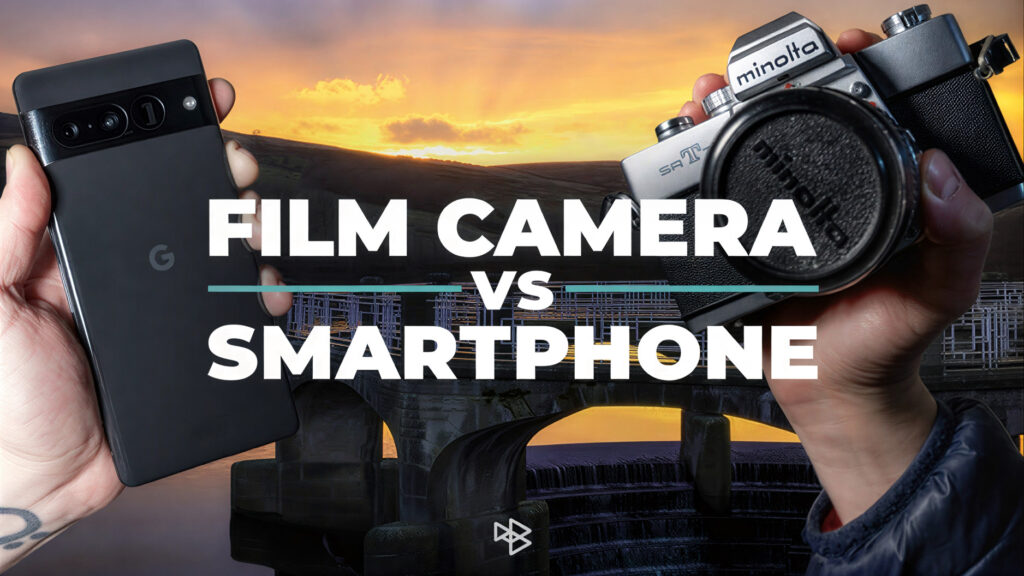
- Often captures and merges multiple exposures
- Applies intelligent, context-aware enhancements
- Overcomes hardware limitations through software
Scene Detection: How Your Phone Knows What You’re Shooting
One of the most impressive AI capabilities in modern smartphone cameras is scene recognition. Your phone doesn’t just see shapes and colors—it understands content and context.
Portrait Mode Intelligence
When you switch to portrait mode, your phone’s AI springs into action:
Face Detection & Recognition: The AI identifies human faces (and sometimes pets), distinguishing them from the background with remarkable accuracy. Advanced systems can recognize specific individuals and remember their preferences.
Depth Mapping: Using multiple lenses or sophisticated algorithms, the camera creates a depth map of the scene, understanding which elements are close and which are distant.
Intelligent Background Processing: The AI doesn’t just blur everything behind the subject. It intelligently separates foreground from background, often creating graduated blur that mimics professional lens bokeh.
Lighting Analysis: The system analyzes lighting on faces and can even simulate studio lighting effects—adding catchlights to eyes, softening harsh shadows, or creating dramatic side lighting.
Food, Pets & Landscape Recognition
Food Mode Enhancement: When AI detects food, it boosts colors (especially reds and oranges), enhances texture detail, and often applies subtle vignetting to draw attention to the dish. Some systems even recognize specific cuisines and apply culturally appropriate enhancements.
Pet Photography Optimization: Pet mode goes beyond simple animal detection. It recognizes different species (dogs, cats, birds) and even specific breeds, optimizing settings accordingly. The AI prioritizes sharp eyes, enhances fur texture, and uses faster shutter speeds to freeze motion.
Landscape & Nature Intelligence: For landscapes, AI enhances sky details, boosts greenery without oversaturation, and often applies perspective correction to make buildings appear straight. Some systems can even recognize famous landmarks and apply specific optimizations.
Document & Text Detection
This practical feature has become incredibly sophisticated:
Automatic Document Detection: When you point your camera at a document, the AI recognizes the rectangular shape, straightens it, removes perspective distortion, and enhances text contrast.
Text Recognition & Enhancement: The system can read text and apply localized sharpening to improve readability. Some phones can even translate text in real-time or convert it to editable formats.
Whiteboard & Business Card Scanning: Specialized modes optimize for whiteboard photos (removing glare, enhancing marker colors) and business cards (extracting contact information automatically).
Low-Light Photography Magic: Seeing in the Dark
Perhaps no area has seen more dramatic improvement from AI than low-light photography. Today’s smartphones can capture details in near-darkness that would have been impossible just a few years ago.
Night Mode Explained
Modern night mode is a symphony of AI coordination:
Multi-Exposure Capture: The camera takes multiple shots at different exposure levels—some bright to capture shadow details, some dark to preserve highlights.
AI Alignment: Even with slight hand movement, the AI aligns these multiple frames with pixel-level precision, using sophisticated algorithms to match features across images.
Intelligent Fusion: Rather than simply averaging images, the AI analyzes each frame to determine which parts are best exposed, least noisy, and sharpest, then combines them optimally.
Noise Pattern Learning: Advanced systems have been trained to recognize and remove specific types of digital noise while preserving genuine image details.
Noise Reduction AI
AI noise reduction has moved beyond simple smoothing:
Context-Aware Denoising: The AI understands what type of content it’s viewing and applies appropriate noise reduction. Skin gets different treatment than foliage, which gets different treatment than text.
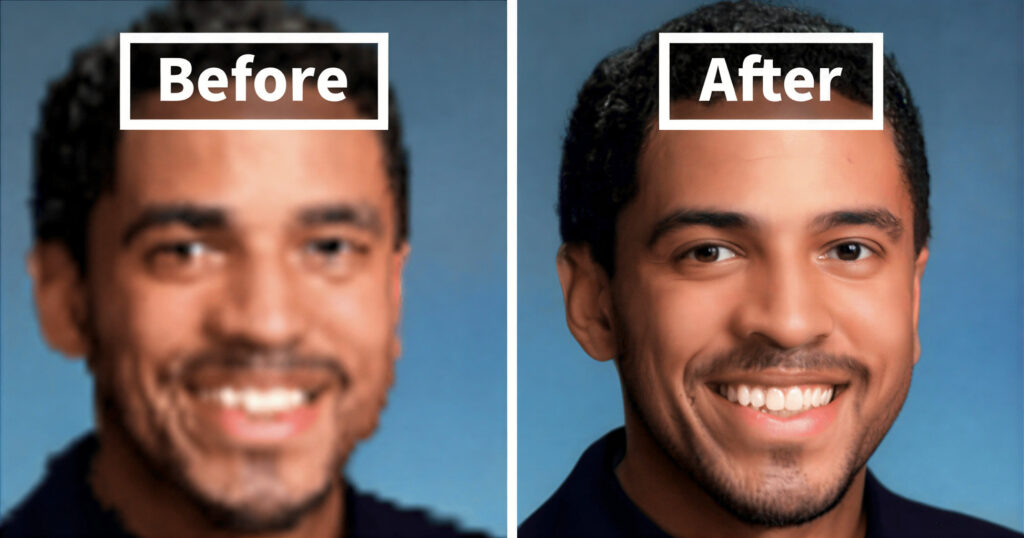
Detail Preservation: Instead of blurring everything, modern AI can distinguish between noise and fine details (like individual strands of hair or fabric textures) and preserve the latter while removing the former.
Color Noise Correction: AI specifically targets color noise (those distracting red, green, and blue speckles) while leaving luminance details intact.
Multi-Frame Image Processing
This computational photography technique represents a fundamental shift:
Burst Capture & Selection: The camera captures a rapid burst of images, then uses AI to select the sharpest frames for each part of the final image.
Exposure Stacking: Different exposures are combined not just for dynamic range but for optimal sharpness, color accuracy, and noise characteristics in each area.
Motion Analysis & Compensation: The AI detects moving elements (like people or vehicles) and processes them differently from static backgrounds to avoid ghosting artifacts.
AI Portrait & Face Enhancement: Your Personal Beauty Editor
Portrait photography has been completely transformed by AI, making everyone look their best with zero effort.
Face Detection & Skin Tone Correction
Individual Face Recognition: Advanced systems don’t just detect faces—they recognize specific individuals and remember their preferences for skin tone, brightness, and enhancement levels.
Ethnicity-Aware Processing: Modern AI has been trained on diverse datasets and applies different enhancements based on detected ethnicity to ensure natural, flattering results for everyone.
Age-Appropriate Enhancement: The AI can estimate age and apply appropriate enhancements—subtle smoothing for mature skin, different approaches for children versus adults.
Background Blur & Bokeh Effects
Depth-Aware Processing: Using data from multiple cameras or sophisticated single-camera algorithms, the AI creates accurate depth maps that allow for natural-looking background separation.
Graduated Blur: Instead of uniform blur, advanced systems create graduated bokeh that mimics professional lenses, with closer background elements less blurred than distant ones.
Foreground Object Handling: The AI intelligently handles elements that cross between foreground and background, like hair or glasses, creating natural transitions rather than harsh cutouts.
Smile & Eye Enhancement
Expression Recognition: Some systems can detect smiles (or other expressions) and capture at the optimal moment.
Eye Enhancement: AI specifically brightens eyes, adds subtle catchlights, and enhances sharpness while maintaining natural appearance.
Teeth Whitening: Natural-looking teeth enhancement that doesn’t create the artificial “glowing teeth” effect of early implementations.
HDR & Color Correction Technology: Perfect Exposure Every Time
High Dynamic Range (HDR) technology has evolved from a special effect to an essential, intelligent feature.
Dynamic Range Improvement
Scene-Dependent HDR: Instead of applying the same HDR strength to every photo, AI analyzes the scene and applies just enough dynamic range expansion to balance the image naturally.
Selective Tone Mapping: Different parts of the image receive different levels of HDR processing. Skies might get more highlight recovery while shadows get less lifting to maintain natural contrast.
HDR Preview: Many phones now show you the HDR result in real-time in the viewfinder, so you know exactly what you’ll get.
True-to-Life Colors
Memory Colors: AI has been trained to recognize “memory colors”—elements like skin tones, blue skies, green grass—and ensure they appear natural even in challenging lighting.
White Balance Intelligence: Instead of simply neutralizing color casts, modern AI considers the scene type. A sunset photo should have warm tones, while a snow scene might need cooler rendering.
Cross-Device Consistency: Some ecosystems use AI to ensure photos look consistent across different devices (phone, tablet, computer) with different display characteristics.
Sunset & Sky Enhancement
Sky Recognition & Enhancement: When AI detects skies, it can enhance cloud texture, improve sunset/sunrise colors, and even replace completely blown-out skies with more dramatic but realistic alternatives.
Golden Hour Detection: Some systems specifically recognize golden hour lighting and apply enhancements that emphasize the warm, soft quality of this light.
Artificial Sky Replacement: While controversial, some AI systems can replace dull gray skies with more dramatic ones from a library, matching lighting and perspective realistically.
AI in Video Recording: Cinematic Quality in Your Pocket
AI hasn’t stopped at photography—it’s revolutionizing video recording too, bringing capabilities that were once limited to professional equipment.
Video Stabilization AI
Predictive Stabilization: Instead of just correcting shakes after they happen, AI predicts motion patterns (like walking gait) and compensates preemptively.
Multi-Axis Correction: Modern systems correct for rotation, translation, and even perspective changes, not just simple shaking.
Intelligent Crop: The AI understands composition and crops the video intelligently during stabilization to maintain framing rather than simply applying uniform correction.
Auto Focus Tracking
Subject Recognition & Locking: AI can identify and lock onto specific subjects (people, pets, vehicles) and maintain focus even as they move through the frame.
Predictive Focus: Advanced systems predict where a moving subject will be and adjust focus proactively rather than reactively.
Face/Eye Priority: In videos with people, the AI prioritizes keeping faces and eyes in sharp focus, even if other elements in the frame might be more prominent contrast-wise.
Cinematic Mode & Effects
Depth-Based Effects: Using computational depth data, phones can apply professional-looking focus transitions (rack focus) and background blur in video.
Auto-Editing Features: Some systems can automatically create highlight reels, apply color grading, or even suggest edits based on analysis of your footage.
Real-Time Effects: AI enables real-time application of filters, beauty effects, and even augmented reality elements in video.
Real-Life Examples You Use Daily
You might not realize it, but AI camera features are working for you every day:
Social Media Content Creation
- Instagram/Facebook photos automatically enhanced before you even apply filters
- TikTok videos stabilized and color-corrected in real-time
- Food photos made more appetizing for restaurant reviews
Professional & Educational Use
- Zoom/Teams meeting cameras applying face enhancement and lighting correction
- Document scanning for remote work or study
- Product photography for small businesses and online marketplaces
Personal Memories
- Family photos where everyone looks their best automatically
- Pet photos that capture personality and detail
- Travel photos that do justice to spectacular scenes
Everyday Practicality
- Scanning receipts and documents for expense tracking
- Capturing whiteboards in meetings or classrooms
- Translating foreign text while traveling
How to Choose the Best AI Smartphone Camera in 2026
With so many options claiming AI camera capabilities, how do you choose? Here’s what really matters:
Key Features to Look For
Dedicated AI Processor: Look for phones with specific neural processing units (NPUs) or AI accelerators, not just general-purpose processors claiming AI capabilities.
Multi-Camera Systems with AI Coordination: The best AI cameras use data from multiple sensors (wide, ultra-wide, telephoto, depth) coordinated by AI for optimal results.
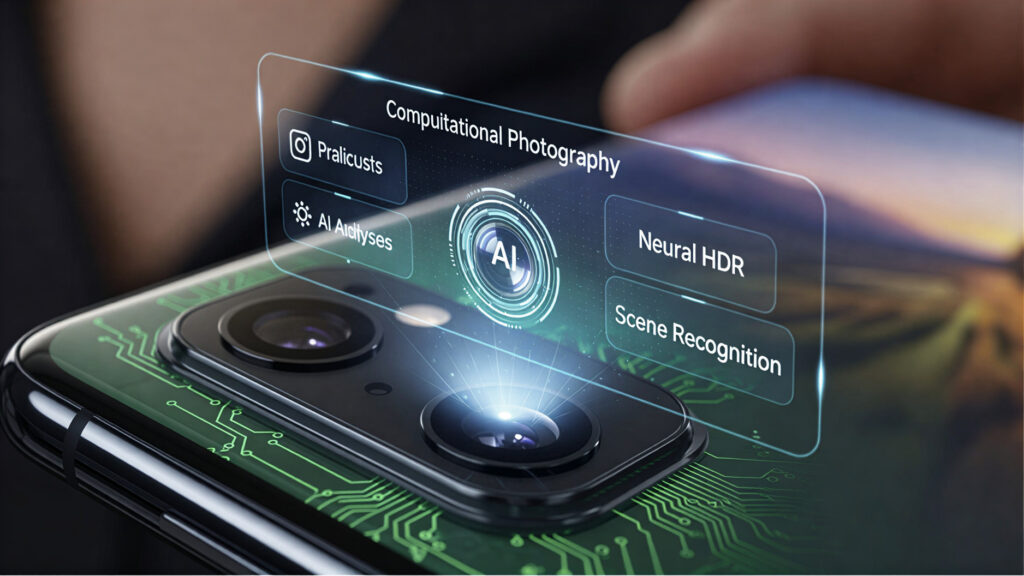
Computational Photography Stack: Research what computational photography features are offered—night mode, portrait mode, HDR capabilities, and how they’re implemented.
Update Track Record: AI improves with software updates. Choose brands with a history of meaningful camera updates over time.
Sample Image Quality: Don’t just read specs—look at sample images, particularly in challenging conditions (low light, backlight, moving subjects).
Budget vs Flagship AI Cameras: What’s the Difference?
Budget Phones ($200-400): Offer competent AI features that handle common scenarios well. May struggle with edge cases or extremely challenging conditions.
Mid-Range Phones ($400-700): Often offer the best value, with most flagship AI features at a lower price. May have slightly slower processing or fewer cutting-edge capabilities.
Flagship Phones ($700+): Offer the most advanced AI features, fastest processing, and often introduce new capabilities first. Better at handling challenging conditions and edge cases.
The Sweet Spot: For most users, mid-range phones in 2026 offer AI camera capabilities that satisfy 90% of needs at 50-60% of flagship prices.
The Critical Importance of Software Updates
AI camera systems improve dramatically with software updates:
Algorithm Improvements: Camera processing algorithms get better over time as manufacturers collect more data and refine their models.
New Feature Additions: Many AI camera features are added via software updates long after purchase.
Bug Fixes & Optimizations: Early issues with AI processing are typically resolved through updates.
Long-Term Support: Choose brands known for providing 3+ years of meaningful camera updates. Some brands abandon camera improvements after the first year.
Conclusion: Everyone Is a Photographer Now
The democratization of photography through AI is one of the most significant technological developments of our time. What was once an art form requiring years of study and thousands of dollars in equipment is now accessible to everyone with a smartphone. AI hasn’t just made photography easier—it’s made it better, helping us capture memories, tell stories, and express creativity in ways previously unimaginable.
Looking ahead, AI will continue to blur the lines between what’s possible with smartphone cameras and traditional photography equipment. We’re moving toward cameras that don’t just capture moments but understand them—recognizing emotions, anticipating perfect moments, and even suggesting creative approaches based on our personal style.
The most exciting development? AI is making photography more inclusive. People who never considered themselves “photographers” are creating beautiful images every day. Those with physical limitations that made traditional photography challenging can now capture stunning photos effortlessly. The visual storytelling that was once limited to professionals is now a universal language.
Ready to experience AI photography yourself? Check out our guides on the Best Smartphones for Students in 2026 & How AI Works Inside Smartphones & Best AI Smartphones Under $300 in 2026 (Top Budget Picks) to find the perfect device for your needs and understand the technology behind these amazing capabilities.
Remember: The best camera isn’t necessarily the one with the most megapixels or the largest sensor—it’s the one that helps you capture the images you envision with the least friction. In 2026, that’s increasingly the AI-powered smartphone in your pocket.

Baqir Ali is the Founder of Baqir Digital Hub and a passionate SEO, AI, and Blogging specialist. With years of experience in digital marketing, he helps beginners and professionals grow online using smart content strategies, AI tools, and SEO best practices. His mission is to simplify technology and help people build sustainable online income.