
📋 What You’ll Discover in This Guide
- How AI personal health monitoring smartphones 2026 track your sleep, stress, heart rate, and activity
- The science behind AI‑powered health detection using your phone’s sensors
- Real examples of AI catching health issues before users noticed anything
- Which smartphones have the most advanced health‑tracking AI
- How to enable these features on your phone right now
Your Phone Felt It Before You Did
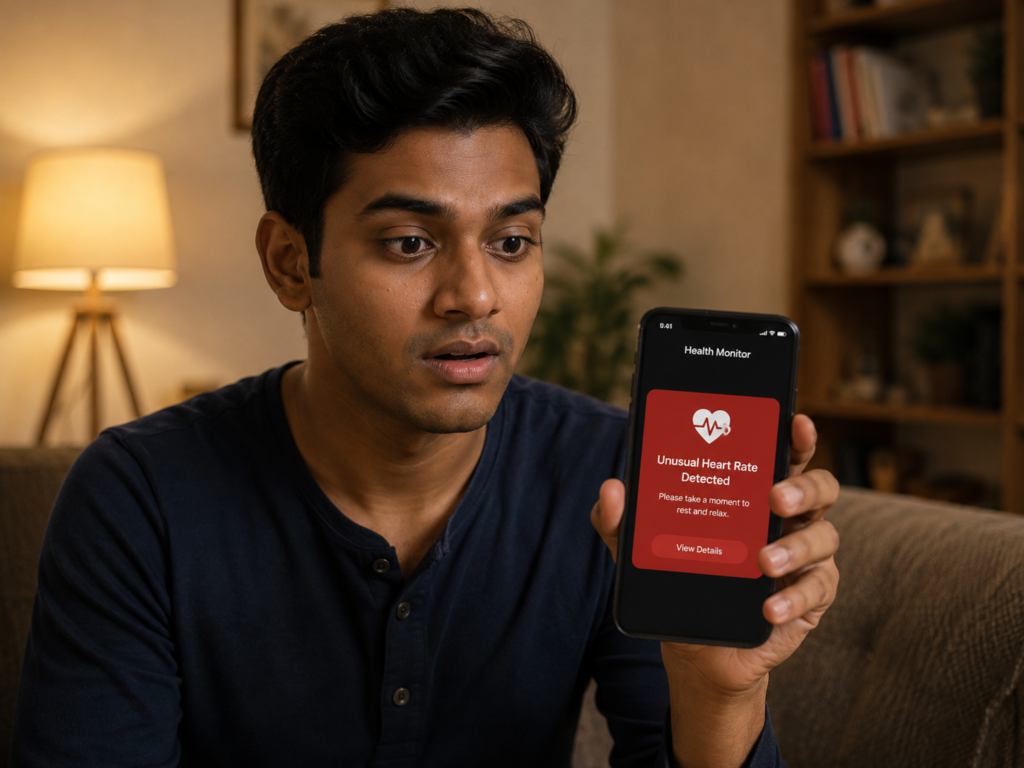
You’re at your desk, focused on work. You feel fine. No headache, no fatigue.
Then your phone buzzes with a notification:
“Your heart rate variability is lower than usual over the last 2 days. Try a 5‑minute breathing exercise or a short walk.”
You pause. You weren’t aware of any stress. But your phone noticed a subtle change in your body’s rhythm — hours before you would have felt tired.
In 2026, smartphones are no longer just communication devices. They are proactive health companions.
- They monitor your sleep, stress, activity, and heart rate trends.
- They analyze patterns you would never see on your own.
- They alert you before small changes become big problems.
- In a 2025 study, users who followed AI‑generated activity suggestions increased their daily steps by an average of 18% over three months.
AI personal health monitoring smartphones 2026 are transforming how we think about wellness — not waiting for symptoms, but detecting early warning signs automatically, silently, and privately.
For a broader understanding of how AI protects your most personal data, check out our guide on AI Privacy Protection in Smartphones 2026.
What Is AI Personal Health Monitoring?
AI personal health monitoring means your smartphone uses built‑in sensors and artificial intelligence to track your physical and mental well‑being — without needing medical equipment.
How It Works (Simple Explanation)
Your phone collects data from:
- Motion sensors (accelerometer, gyroscope) – steps, walking stability, sleep movement
- Camera – heart rate via fingertip (color changes on your skin)
- Microphone – breathing patterns, snoring detection
- Wearables (watch, band) – continuous heart rate, ECG, blood oxygen
The AI combines all this data, learns your normal patterns, and alerts you when something deviates.
Think of it as a digital health assistant that never sleeps.
How AI Monitors Your Health
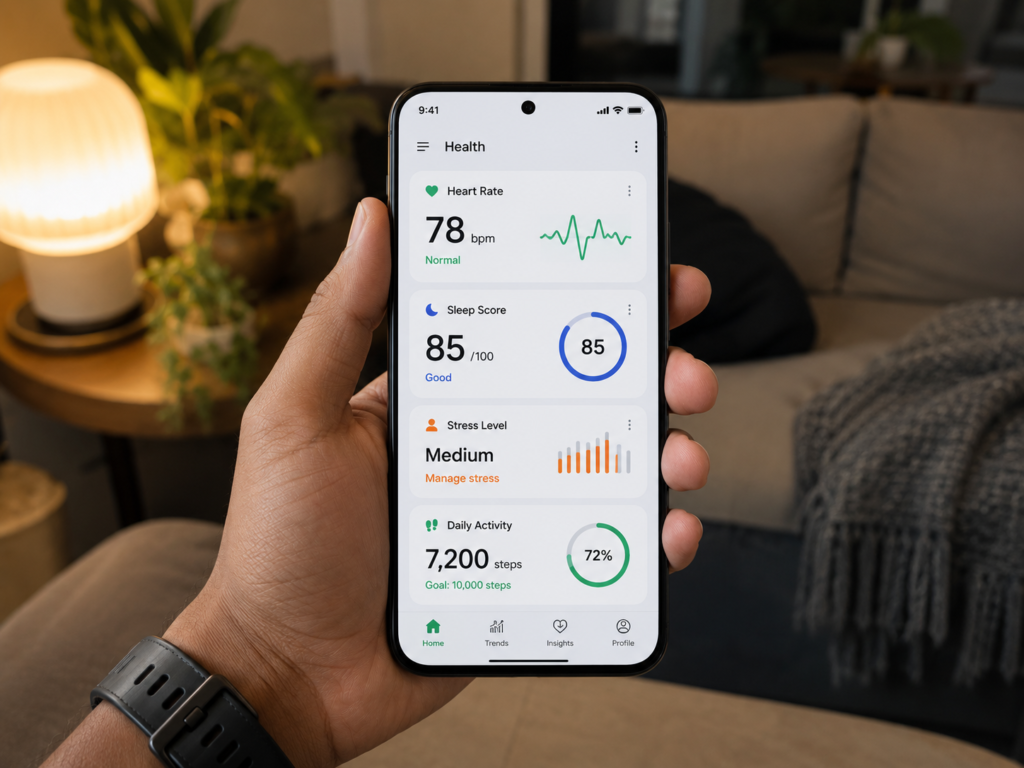
AI personal health monitoring smartphones 2026 use multiple layers of analysis to understand your well‑being.
1. Sleep Monitoring
The AI analyzes:
- Sleep duration – total hours asleep
- Sleep interruptions – how often you wake up
- Consistency – same bedtime vs erratic schedule
- Deep vs light sleep (using motion + sound)
Example: You’ve had 3 nights of poor sleep in a row. AI suggests: “Try sleeping 30 minutes earlier tonight. Your productivity may improve tomorrow.”
2. Stress Detection
AI observes behavioral clues:
- Typing speed – slower or more errors than usual
- Voice tone (during calls) – tension or fatigue
- Activity levels – sudden drop in movement
- Screen usage – late‑night scrolling patterns
It then generates a stress score and offers calming suggestions (breathing exercise, short walk).
3. Heart Health Monitoring
With a compatible wearable (or using the camera‑based fingertip check):
- Resting heart rate trends
- Recovery rate (how fast your heart slows after walking)
- Irregular rhythm detection (possible atrial fibrillation)
The AI doesn’t diagnose — but it flags patterns that you can share with a doctor.
These alerts are informational only and are not a substitute for professional medical diagnosis or advice.
4. Activity Analysis
AI tracks:
- Daily steps and distance
- Walking/running pace
- Sedentary time (how many hours you sit without movement)
- Active minutes per day
It also gives personalized goals based on your history, not generic recommendations.
Real Examples of AI Health Monitoring in Action
Example 1: Poor Sleep Trend
Problem: A user felt fine, but her phone showed 4 nights of broken sleep and late bedtimes.
AI Action: Notification: “Your sleep consistency is low. Would you like a bedtime reminder?”
Outcome: She set a reminder, slept earlier, and her energy level improved after 3 days.
Example 2: Reduced Daily Activity
Problem: A desk worker’s daily steps dropped from 6,000 to 2,000 over 2 weeks. He didn’t notice.
AI Action: Alert: “You’ve been less active recently. Try a 10‑minute walk after lunch.”
Outcome: He resumed walking, and his step count returned to normal.
Example 3: Unusual Heart Rhythm
Problem: A user’s wearable showed occasional irregular heartbeat patterns during rest.
AI Action: The phone flagged the pattern and recommended a medical checkup.
Outcome: The user visited a doctor, discovered a minor arrhythmia, and received treatment early — before symptoms appeared.
Benefits of AI Health Monitoring
| Benefit | What It Means for You |
|---|---|
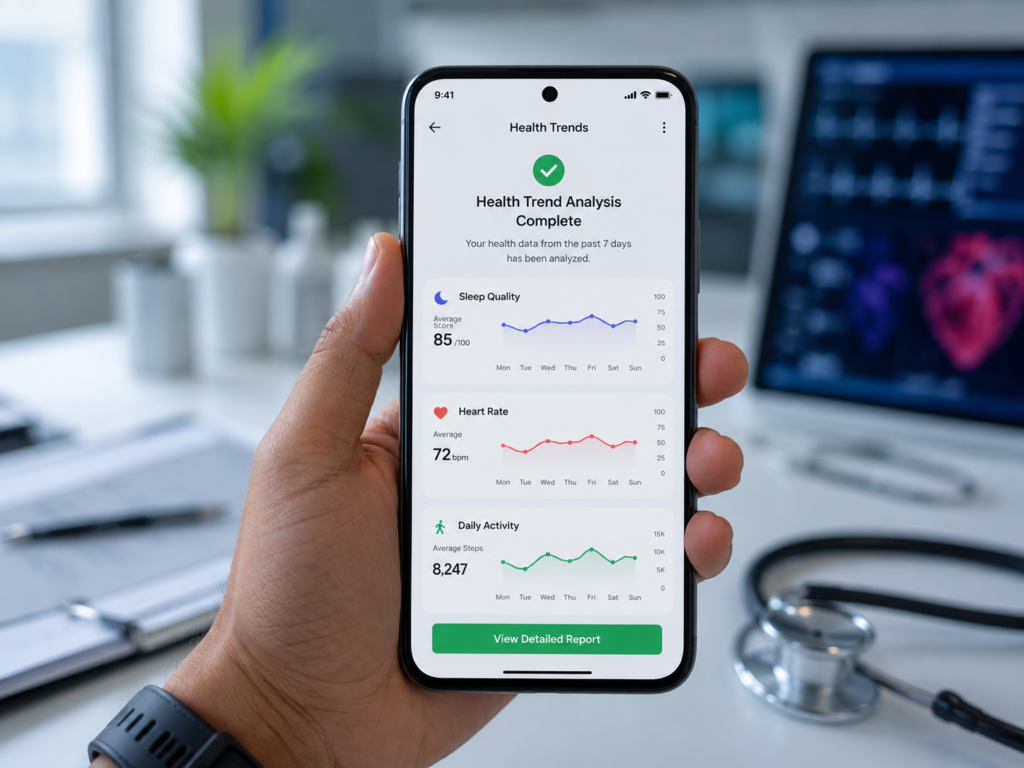
| Early awareness | You notice health trends before you feel bad. |
| Better habits | AI gives personalized, gentle nudges (sleep, move, hydrate). |
| Preventive care | Small changes now can prevent bigger issues later. |
| Personalized insights | No generic advice — your phone learns your patterns. |
| Peace of mind | Knowing that something is watching out for you. |
Health Monitoring Features Comparison (2026)
| Feature | Budget Phones | Mid‑Range | Flagship |
|---|---|---|---|
| Sleep tracking | Basic (duration only) | Advanced (interruptions, consistency) | AI predictive (recommend bedtime) |
| Stress monitoring | ❌ | Limited (screen‑based) | Full (voice + typing + activity) |
| Heart rate trends | Manual (camera check) | Automatic (with wearable) | Continuous + irregular rhythm detection |
| Health insights | Basic | Detailed reports | Personalized AI coach |
| Wearable integration | Limited | Good | Full ecosystem (watch, band, etc.) |
Best Smartphones for AI Health Features
| Brand | Key Health AI Features |
|---|---|
| Google Pixel | Wellness insights, sleep tracking, activity goals, Pixel Watch integration |
| Samsung Galaxy | Samsung Health AI, stress score, heart rate + blood pressure (with compatible watch), sleep coaching |
| Apple iPhone | Apple Health, sleep stages, heart rate trends, ECG (with Apple Watch), respiratory rate |
👉 Looking for an affordable phone with good health AI? Our Best Budget AI Smartphones in 2026 guide includes health features in its comparisons.
How to Enable Health Monitoring on Your Phone
For Android Users
- Open Settings → Health (or Digital Wellbeing & parental controls)
- Tap Health Connect – enable permissions for sleep, activity, heart rate
- Install Google Fit or your phone manufacturer’s health app (Samsung Health, etc.)
- Grant sensor permissions (motion, camera for heart rate check)
- Turn on wellness notifications
For iPhone Users
- Open Health app (pre‑installed)
- Tap your profile → Health Details → enter your info
- Go to Browse → enable Sleep, Heart, Activity
- If you have an Apple Watch, pair it and turn on heart rate notifications
- In Settings → Privacy → Motion & Fitness → enable fitness tracking
Future of AI Health Monitoring
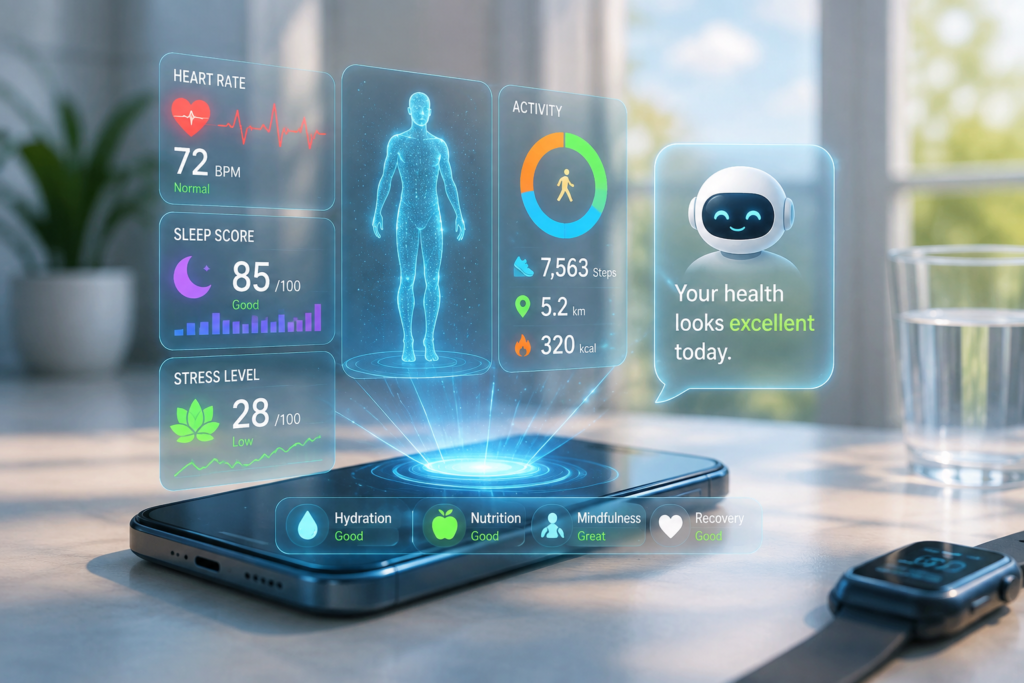
- Predictive health alerts – AI may eventually detect disease risks (e.g., prediabetes patterns) months in advance.
- Personalized health coach – Your phone will become a 24/7 wellness guide, not just a tracker.
- Early disease detection – Long‑term trend analysis will identify subtle signs of conditions like hypertension, sleep apnea, or depression.
- AI + smartwatch integration – Seamless ecosystem where phone and watch work as one complete health profile.
FAQ: Your AI Health Monitoring Questions Answered
Q1. Can smartphones monitor health using AI?
Yes. AI personal health monitoring smartphones 2026 use built‑in sensors (motion, camera, microphone) and AI models to track sleep, stress, heart rate trends, and daily activity.
Q2. How does AI track sleep quality?
AI analyzes movement (accelerometer), light levels, and sometimes sound (snoring). It measures duration, interruptions, and consistency.
Q3. Can AI detect heart problems?
AI flags abnormal patterns (irregular rhythm, unusual resting heart rate trends). It does not replace medical diagnosis, but it can provide early warnings.
Q4. Is smartphone health monitoring accurate?
For tracking trends (e.g., sleep quality improving or worsening), it is very reliable. For exact medical measurements, wearables (watches) are more accurate.
Q5. Which phones have the best AI health features?
Google Pixel, Samsung Galaxy, and Apple iPhone lead the market. Mid‑range models from these brands also offer solid health tracking.
Q6. Does AI health monitoring require internet?
Most analysis happens on‑device. Syncing with the cloud for long‑term history requires occasional internet, but real‑time tracking works offline.
Q7. Can AI detect stress levels?
Yes. AI analyzes typing behavior, voice tone, activity, and screen use to estimate stress. It then offers calming suggestions.
Q8. Is my health data private?
Yes — on modern devices. All health data stays on‑device or in your encrypted personal cloud account. It is not sold to advertisers.
Your Phone Is Becoming Your Personal Health Assistant
In 2026, your smartphone does more than keep you connected. It keeps you aware.
It doesn’t replace your doctor. It gives you a head start.
- It monitors your sleep, stress, and activity.
- It analyzes patterns you would miss.
- It warns you when something changes.
- It guides you toward better habits.
AI personal health monitoring smartphones 2026 are turning ordinary devices into proactive wellness companions. When you choose your next phone, look for features like:
- Sleep tracking with insights
- Stress detection
- Heart rate trend monitoring
- Activity reminders
That’s the real shift in 2026 — your phone isn’t just tracking data, it’s helping you notice things you’d otherwise miss.
💬 Join the Conversation
Have you ever received a health alert from your phone? Did it surprise you?
Share your experience in the comments below — I read and respond to every message.
Written by Baqir Ali
Founder of Baqir Digital Hub | AI Security Researcher
Baqir has been helping beginners understand AI and smartphone security since 2024. His work focuses on making complex tech simple, practical, and actionable for everyday users.
🔗 Related Guides on AI Smartphone Features
- AI Privacy Protection in Smartphones 2026
- AI Biometric Security in Smartphones 2026
- AI Offline Intelligence in Smartphones 2026

Baqir Ali is the Founder of Baqir Digital Hub and a passionate SEO, AI, and Blogging specialist. With years of experience in digital marketing, he helps beginners and professionals grow online using smart content strategies, AI tools, and SEO best practices. His mission is to simplify technology and help people build sustainable online income.