
📋 What You’ll Discover in This Guide
- Why your phone needs smarter security in 2026 — and why passwords aren’t enough anymore
- How AI biometric security smartphones 2026 protect your face, fingerprint, and identity
- The difference between old biometrics and AI-powered systems
- Real threats that AI stops — from fake fingerprints to printed face photos
- Which smartphones offer the best AI biometric protection
- How to enable these features on your phone right now
Why Smartphone Security Needs AI in 2026
Think about what’s on your phone right now.
Your bank account. Your private photos. Your messages with family. Your work emails. Your social media. Your payment cards.
Everything that matters to you lives inside that small device.
Now think about how you protect it — maybe a 4-digit PIN, a pattern you draw, or your fingerprint. The problem is, in 2026, traditional security isn’t enough anymore.
- PINs can be guessed or watched over your shoulder
- Patterns leave smudge marks on your screen
- Basic fingerprint scanners can be fooled with silicone copies
- Simple face unlock can be tricked with a printed photo
Hackers and thieves have gotten smarter. They know how to bypass old security.
This is where AI biometric security smartphones 2026 come in. They don’t just check your face or fingerprint once. They use artificial intelligence to continuously verify it’s really you — analyzing depth, movement, behavior, and even blood flow.
Your phone no longer trusts what you know. It trusts who you are.
For a broader look at how AI is protecting your smartphone, check out our guides on AI Phishing Detection Smartphones 2026 and AI Voice Cloning Scam Detection on Smartphones in 2026.
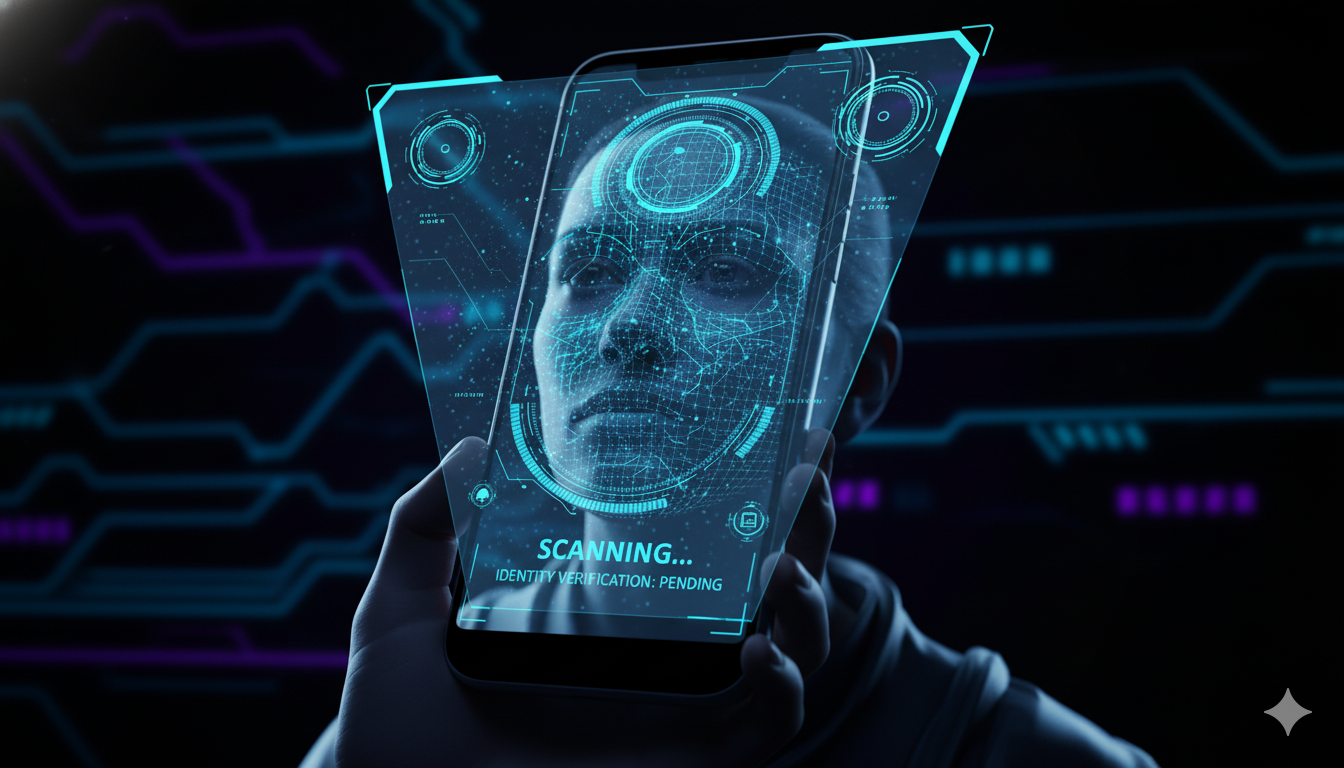
What Is Biometric Security on Smartphones
Biometric security means using your unique physical characteristics to unlock your phone and verify your identity.
Common Biometric Methods:
| Method | How It Works |
|---|---|
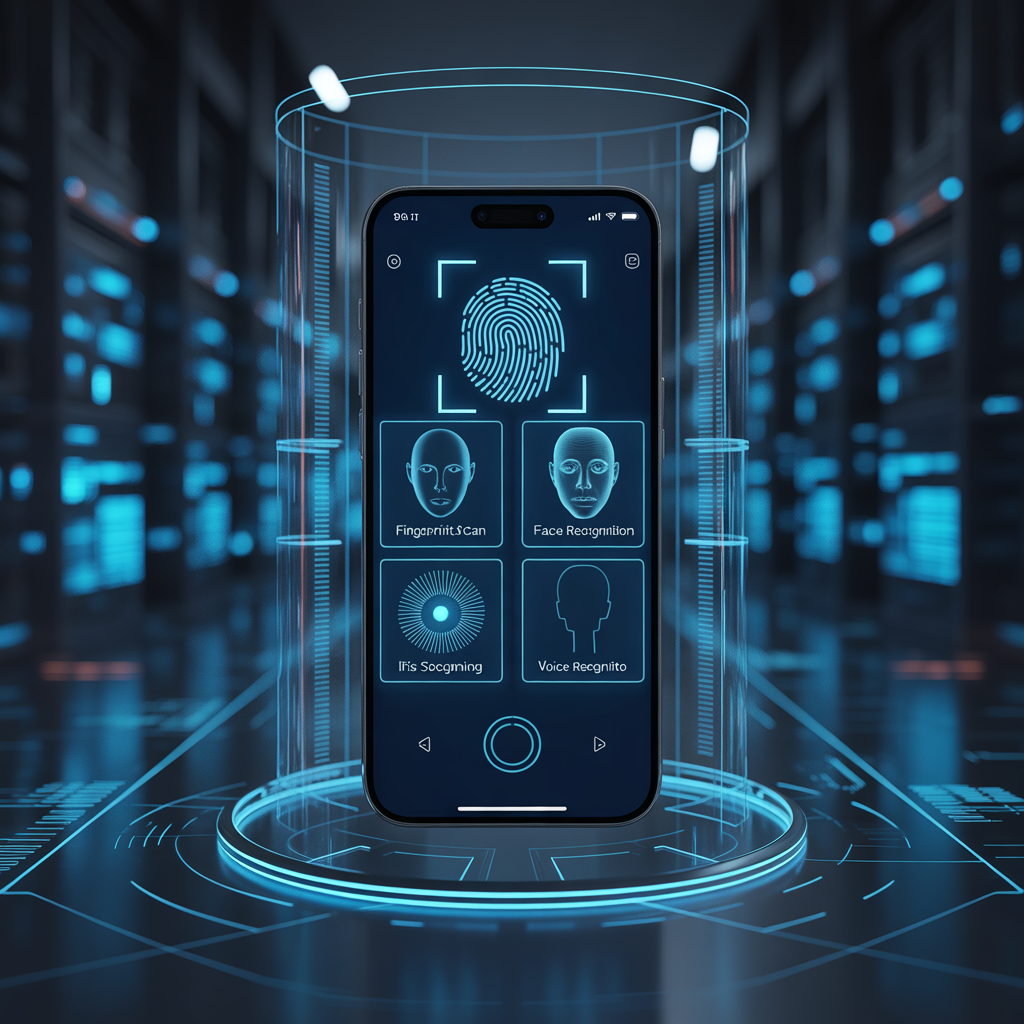
| Face Recognition | Camera scans your face and compares it to stored data |
| Fingerprint Scanner | Sensor reads the unique patterns on your fingertip |
| Voice Authentication | Microphone analyzes your voice patterns |
| Iris Scanning | Camera scans the unique patterns in your eye |
Traditional Biometric Security vs AI Biometric Systems
Old biometric systems were simple. They took one scan and compared it to a stored image. If it looked similar enough, you were in.
The problem: They could be fooled by:
- High-quality photos of your face
- Silicone fingerprints
- Recordings of your voice
- Basic masks
AI biometric security smartphones 2026 are completely different. They don’t just take one scan and call it done. They:
- Analyze multiple layers of biometric data
- Learn how you behave over time
- Detect if something is fake (photo, mask, recording)
- Continuously verify your identity while you use the phone
How AI Improves Biometric Security
Let’s look at how AI makes each biometric method significantly more secure.
AI Face Recognition
Old face unlock could be fooled by a printed photo. AI face recognition in 2026 is completely different:
- 3D face mapping: AI creates a detailed 3D map of your face using depth sensors and multiple cameras
- Facial movement analysis: Real faces have tiny, involuntary movements. Photos and masks don’t.
- Blood flow detection: Some systems can detect the subtle color changes in your skin from blood circulation
- Texture analysis: AI checks skin texture, pores, and fine details that fakes can’t replicate
The result: Even a perfect silicone mask can’t fool AI face recognition.
AI Fingerprint Recognition
Fingerprint scanners have also evolved with AI:
- Pattern recognition: AI analyzes your fingerprint’s unique patterns at a microscopic level
- Sweat pore analysis: Real fingers have sweat pores that create tiny variations — AI detects these
- Fingerprint texture: AI examines the actual texture of your skin, not just the pattern
- Live finger detection: AI can tell if the finger is real or a silicone copy by measuring conductivity and pulse
AI Behavior Analysis
This is where AI biometric security smartphones 2026 get really smart. Your phone learns how you behave:
- Typing speed and rhythm: How fast do you type? How long do you hold each key?
- Phone movement: How do you pick up your phone? What angle do you hold it at?
- Unlock habits: What time do you usually unlock your phone? Which apps do you open first?
- Walking gait: The accelerometer can detect how you walk
If someone steals your phone and tries to use it, their behavior will be completely different from yours. The AI notices this and can:
- Require additional authentication
- Lock sensitive apps
- Send you an alert
This is continuous authentication — security that never sleeps.
Real Security Threats AI Biometric Protection Can Stop
Here are real-world threats that AI biometric security smartphones 2026 prevent every day:
Fake Fingerprint Attempts
The threat: Someone lifts your fingerprint from a glass surface, creates a silicone copy, and tries to unlock your phone.
How AI stops it: AI detects that the silicone fingerprint lacks:
- Natural sweat pore patterns
- Skin texture variations
- Electrical conductivity of living skin
- Pulse micro-vibrations
Result: The fake fingerprint is rejected, and the phone logs the attempt.
Printed Face Photos
The threat: Someone prints a high-quality photo of your face and holds it in front of your phone’s camera.
How AI stops it: AI checks for:
- 3D depth (photos are flat)
- Facial movement (photos don’t blink or micro-move)
- Blood flow (no circulation in photos)
- Skin texture (printed paper vs real skin)
Result: The phone doesn’t unlock and may capture an image of the person attempting.
Deepfake Face Unlock Attacks
The threat: Someone creates a deepfake video of your face using AI and plays it on a screen in front of your phone.
How AI stops it: AI analyzes:
- Screen reflection patterns (real faces don’t have screen glare)
- Unnatural blinking frequencies
- Digital artifacts in deepfake videos
- Synchronization between video and environment
Result: The deepfake is detected and blocked.
Identity Theft Attempts
The threat: Someone steals your phone and tries to reset passwords or access sensitive apps.
How AI stops it: Behavior analysis detects that:
- The way they hold the phone is different
- Their typing rhythm doesn’t match yours
- They’re trying to access apps you never use
- The unlock attempts happen at unusual times
Result: Phone locks sensitive apps, requires additional verification, and may send you an alert.
Which Smartphones Have the Best AI Biometric Security
Different manufacturers approach AI biometric security differently. Here’s what the leaders offer:
Google Pixel Security
- Tensor AI chip dedicated to on-device machine learning
- Face Unlock with AI-powered 3D mapping
- Fingerprint Unlock with AI pattern recognition
- Continuous authentication through behavior analysis
- Regular security updates with new AI models
Samsung Galaxy AI Security
- Samsung Knox hardware-level security integrated with AI
- Intelligent Scan combines face and iris recognition
- AI-powered fingerprint with live finger detection
- Secure Folder protected by AI biometrics
- Auto-block suspicious biometric attempts
Apple iPhone Security
- Face ID powered by Neural Engine AI
- Secure Enclave hardware isolation for biometric data
- Attention awareness — phone only unlocks when you’re looking at it
- AI behavior learning for adaptive security
- Biometric authentication for apps and payments
Comparison Table: AI Biometric Security
| Feature | Budget Phones | Mid-Range | Flagship |
|---|---|---|---|
| Face Recognition | 2D basic | 3D improved | AI 3D + depth + movement |
| Fingerprint Scanner | Optical basic | Ultrasonic | AI ultrasonic + live detection |
| Behavior Analysis | ❌ | Basic | Continuous AI |
| Fake Detection | ❌ | Limited | AI-powered |
| On-device AI chip | Basic NPU | Mid-tier NPU | Dedicated security AI |
The sweet spot: Mid-range phones from 2026 (Google Pixel 7a/8a, Samsung Galaxy A55/A56, OnePlus Nord CE) offer much of the same AI biometric security as flagship models, at a lower price.
👉 Looking for affordable phones with strong AI security? Read our Best Budget AI Smartphones in 2026 with Biometric Protection guide to compare secure options.
How to Enable Biometric Security on Your Phone
For Android Users
Step 1: Open Settings
Step 2: Go to Security or Biometrics and Security
Step 3: Select:
- Face Unlock — follow instructions to scan your face
- Fingerprint Unlock — register your fingerprints
- Smart Lock — keep phone unlocked in trusted places (optional)
Enable additional protection:
- Settings → Security → Google Play Protect
- Turn on “Scan device for security threats”
- Enable “Real-time scanning”
For iPhone Users
Step 1: Open Settings
Step 2: Go to Face ID & Passcode (or Touch ID & Passcode)
Step 3: Enable:
- Face ID for iPhone Unlock
- Face ID for iTunes & App Store
- Face ID for Wallet & Apple Pay
- Attention Awareness — requires your eyes to be open
Additional settings:
- Settings → Face ID & Passcode → Set Up an Alternate Appearance (adds extra security)
- Settings → Privacy & Security → Lockdown Mode (extreme protection for high-risk users)
Future of AI Biometric Security in Smartphones
What’s coming in 2027 and beyond:
Continuous Authentication
Instead of unlocking once, your phone will continuously verify it’s you — every moment you use it. If your behavior changes, the phone can lock automatically.
AI Detecting Stress or Abnormal Behavior
Future systems may detect if you’re being forced to unlock your phone under threat. If AI senses stress in your face, voice, or behavior, it could:
- Show a fake home screen
- Send silent alerts to emergency contacts
- Limit access to sensitive apps
Multi-Layer Biometric Verification
Phones will combine:
- Face recognition
- Fingerprint scanning
- Voice authentication
- Behavior analysis
- Location verification
All in one seamless authentication process.
AI Identity Protection Across Apps
Your biometric identity will protect you across all apps — not just phone unlock. AI will verify it’s really you before allowing:
- Bank transfers
- Password changes
- App installations
- Sensitive data access
FAQ: Your AI Biometric Security Questions Answered
Q1: What is AI biometric security in smartphones?
AI biometric security uses artificial intelligence to analyze your unique physical characteristics — face, fingerprint, voice, behavior — and continuously verify your identity. Unlike basic biometrics, AI detects fakes, learns your patterns, and adapts over time.
Q2: How does AI improve face recognition security?
AI face recognition analyzes 3D depth, facial movement, blood flow, and skin texture. This prevents attacks using photos, videos, masks, or deepfakes. It can tell the difference between a real face and a fake one.
Q3: Are fingerprint scanners safe on smartphones?
Yes — especially with AI. Modern AI fingerprint scanners analyze sweat pores, skin texture, and live finger detection. They can tell if someone is using a silicone copy of your fingerprint.
Q4: Can AI detect fake biometric attempts?
Yes. AI is specifically trained to detect:
- Printed face photos
- Silicone fingerprints
- Deepfake videos
- Recorded voice attempts
- 3D masks
It analyzes multiple factors that fakes can’t replicate.
Q5: Which phones have the best biometric security?
Google Pixel (Tensor AI), Samsung Galaxy (Knox AI), and iPhone (Neural Engine) lead in AI biometric security. Mid-range options from these brands offer excellent protection too.
Q6: Is biometric authentication safer than passwords?
Yes. Biometrics are significantly harder to steal or replicate than passwords. You can’t guess someone’s face or fingerprint. Plus, AI adds an extra layer of protection against fakes.
Q7: Can someone unlock my phone while I’m sleeping?
With AI-powered face recognition that requires attention awareness — no. Modern systems need your eyes open and looking at the phone. Some also require slight head movement.
Q8: Is my biometric data stored in the cloud?
No. All biometric data is stored locally in a secure hardware chip (Secure Enclave in iPhones, Titan M in Pixels, Knox in Samsung). It never leaves your device.
As mobile threats become more advanced, smartphones must evolve too. AI biometric security smartphones 2026 represent a major shift from simple locks to intelligent identity protection — ensuring that only you can access your device.
Conclusion: Your Identity Is Your Password
We’ve moved past the era of remembering complex passwords and worrying about PINs being stolen. In 2026, your identity itself is the key.
AI biometric security smartphones 2026 don’t just check your face or fingerprint once. They continuously verify it’s really you — analyzing depth, movement, behavior, and countless other factors.
AI face recognition security has evolved to detect even the most sophisticated fakes. Smartphone biometric protection now includes behavior analysis that knows how you type, walk, and hold your phone. AI fingerprint security phones can tell the difference between your real finger and a silicone copy.
When you choose your next phone, don’t just look at the camera specs or battery life. Ask:
- Does it have on-device AI biometric processing?
- Can it detect fake biometric attempts?
- Does it include behavior analysis?
- Are security updates regular?
Because in a world where your phone holds your entire digital life, AI biometric security is your most important feature.
🔗 Related Guides on AI Smartphone Security
- AI Phishing Detection Smartphones 2026: How AI Stops Fake Links and Scam Messages
- AI Voice Cloning Scam Detection on Smartphones in 2026
- AI App Malware Detection Smartphones 2026: How AI Stops Dangerous Apps
- How AI Detects Fake News & Deepfakes on Smartphones in 2026

Baqir Ali is the Founder of Baqir Digital Hub and a passionate SEO, AI, and Blogging specialist. With years of experience in digital marketing, he helps beginners and professionals grow online using smart content strategies, AI tools, and SEO best practices. His mission is to simplify technology and help people build sustainable online income.